
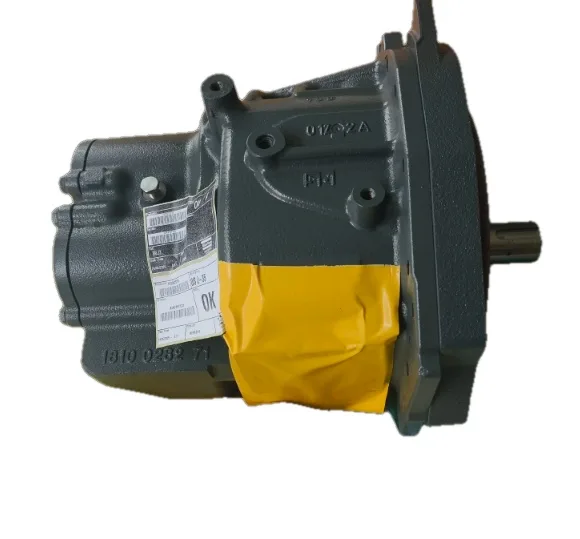
The short answer: classify an air end on two separate axes. First identify the compression technology—such as oil-injected screw, oil-free screw or scroll—and the scope of the item, such as a complete element, stage or component. Then record the package application, such as stationary or portable. These labels explain what the part does, but the exact Atlas Copco part number and machine serial record still decide what can be ordered.
Mixing those axes causes avoidable confusion. “Portable air end” describes a duty context, not one mechanical design. “Oil-free element” describes the compression path, not proof that every mechanical circuit in the compressor contains no lubricant. The sections below keep the categories separate and turn each one into a useful procurement check.
Air end, compressor element and stage are related terms—not complete part identities
Atlas Copco describes the air end or element as the core compressor assembly in which the air is compressed. In rotary screw equipment, that generally means the rotor set and its precision housing together with the interfaces required by the design. In scroll equipment, it is the fixed-and-orbiting scroll assembly that progressively reduces the air pockets.
The word stage needs more care. A multi-stage oil-free screw compressor can have a distinct low-pressure and high-pressure stage. A service-stage reference may also describe a serviceable assembly with a defined scope. A component or kit can sit below that assembly. The noun on a web page should therefore be checked against the part number and quoted contents.
Oil-injected rotary screw air ends
In an oil-injected screw element, oil enters the compression chamber. It lubricates moving components, helps seal the clearance between rotors and housing, absorbs compression heat and carries that heat toward the separation and cooling circuit. The air-and-oil mixture leaving the element is then separated elsewhere in the package.
This arrangement is widely used in general industrial compressor systems where the process air specification can be met by the compressor and downstream treatment together. Atlas Copco's comparison notes that, with suitable and maintained filtration, oil-injected systems can reach ISO 8573-1 Class 1 oil purity; this is not the same as a compressor certified for Class 0.
Oil-injected screw: what the buyer should verify
- Identity
- Complete air-end part number and any element code.
- Machine
- Model, serial number and pressure or production variant.
- Interfaces
- Drive, flange or feet, inlet, discharge and oil connections.
- System condition
- Oil, cooler, separator and control issues that must be corrected before fitting a new element.
Oil-free screw elements and stages
In an oil-free screw element, no oil is introduced into the compression chamber. External timing gears synchronize the rotors so they do not contact each other. The gearbox can still contain lubricant in a separate sealed circuit; “oil-free” describes the compression process and delivered-air path, not the absence of every lubricant in the package.
Atlas Copco explains that oil-free screw compressors frequently use multiple compression stages with interstage cooling. This controls temperature while building pressure. For parts work, that makes stage identity important: a low-pressure stage, high-pressure stage and associated service assembly should not be treated as interchangeable because their housings appear related.
Atlas Copco identifies certified oil-free compressors with ISO 8573-1 Class 0 capability. Class 0 and filtered Class 1 are different specifications; confirm the process requirement before selecting compressor technology.
- Record the stage position and complete part number.
- Confirm timing-gear, drive and cooling interfaces from the machine record.
- Preserve air-path cleanliness during receiving, storage and installation.
- Use qualified service procedures for alignment, clearances, seals and rotor coatings.
Oil-free scroll compressor elements
A scroll element uses two spiral forms rather than screw rotors. One scroll remains fixed while the other orbits. Air enters at the outer edge, becomes trapped in progressively smaller pockets and moves toward the central discharge. In Atlas Copco's oil-free SF scroll design, the compression scrolls do not make metal-to-metal contact, so oil is not required in the compression chamber.
That working principle creates a different set of purchase checks. A buyer should confirm the complete scroll-element reference, package arrangement, mounting, motor or drive interface and the scope of the supplied assembly. A screw air-end code cannot be used as a substitute classification.
Use the complete orderable number, not only the compressor model or scroll family.
Confirm whether the compressor uses one or several scroll modules and which position is being serviced.
Compare mounting, shaft or motor connection and attached cooling or air components.
Service stages, complete elements and components must be separated
Product scope is as important as technology. A photograph may show an air end with attached gears, valves, brackets or piping, while the commercial reference covers only one defined assembly. Conversely, a service-stage reference can include more than the bare compression housing. The quotation should state what the genuine Atlas Copco part number represents and which attached items are included.
Confirm the complete assembly number and whether visible external items are included.
Confirm the current service reference, earlier related number, stage position and machine serial.
Confirm the exact component number and the parent air-end assembly to which it belongs.
Confirm the kit number and written contents rather than building the expected scope from a photograph.
Stationary and portable describe application, not one air-end design
A stationary compressor is normally installed in a factory or compressor room and supplies one or more users through a plant air network. The pipework and receiver volume create a larger buffer, and demand can be shared across the system. A portable compressor is designed around mobility and often supplies a single project, tool group or process with a smaller system buffer and rapidly changing demand.
Atlas Copco's portable-compressor guidance starts with required flow, pressure and air quality, then adds environment and logistics. Temperature, dust, humidity, altitude, transport and storage can all influence the package selected for the job. These factors help explain duty, but the air-end order still returns to the serial number and part record.
Plant air network
- Fixed installation and defined compressor-room conditions
- Multiple users connected through piping and receiver volume
- Machine variant, pressure configuration and drive remain part-specific
- Use the stationary classification to narrow the catalog, not approve the part
Mobile duty
- Flow and pressure follow the tool or project requirement
- Ambient dust, heat, humidity and altitude may be more variable
- Package drive, regulation and mounting differ from plant machines
- Use the portable parts book and complete machine serial record
Air-end procurement matrix
The matrix does not assign pressure, power or machine families. It shows which identity fields deserve attention after the correct category has been established.
Air-end classification at a glance
- Technology
- Oil-injected screw, oil-free screw and scroll describe how compression occurs.
- Scope
- Air end, element, stage, service unit, component and kit describe different commercial levels.
- Application
- Stationary and portable describe the compressor package and duty context.
- Identity
- The exact Atlas Copco part number and machine serial record control the final purchase.
Frequently asked questions
What is the difference between an air end and a compressor element?
In rotary screw compressor use, air end and compressor element commonly describe the core assembly in which compression occurs. Atlas Copco also uses element and stage terminology in product and service contexts. The exact order must still use the complete commercial part number, because the nouns alone do not define scope.
What is the difference between oil-injected and oil-free screw air ends?
An oil-injected screw element uses oil in the compression chamber for cooling, lubrication and sealing. In an oil-free screw element, no oil enters the compression chamber; timing gears synchronize the rotors, and the compressor may use multiple stages with interstage cooling.
Does oil-free mean the entire compressor contains no lubricant?
No. Oil-free refers to the compression process and air path. An oil-free screw compressor can still use lubricant in a separate gearbox or other isolated mechanical circuit without introducing it into the compression chamber.
Is a scroll compressor element an air end?
It can be described as the compression element or air end of a scroll compressor. It uses a fixed scroll and an orbiting scroll rather than screw rotors, so its construction and purchase checks are different from a rotary screw element.
Is stationary or portable classification enough to identify an air end?
No. Stationary and portable describe the compressor package and duty context. Many different elements can sit within either group. Final identification still requires the air-end part number, machine model and serial record.
Can compressors with the same motor power use different air ends?
Yes. Motor power does not define rotor profile, pressure version, speed, drive, mounting or machine revision. It is useful background information but should not be used as the purchase identity.
What should be checked when buying a service stage or element component?
Confirm the exact service or component part number, the parent air-end assembly, stage position where applicable, machine serial number and the items included in the quoted scope. Do not assume a component photograph represents a complete air end.
Official references used for this article
Technical statements were checked against the Atlas Copco resources below. Links are provided so maintenance and purchasing teams can inspect the original context.
- Atlas Copco: Working principle of a screw compressorOfficial explanation of rotary screw compression, oil-injected chamber functions, oil-free timing gears and multi-stage oil-free compression.
- Atlas Copco: Oil-injected and oil-free compressor comparisonOfficial comparison of compression-chamber lubrication, cooling, attainable air-purity classes and typical application groups.
- Atlas Copco: SF+ and SFe oil-free scroll compressorsOfficial description of fixed and orbiting scroll elements, progressive compression and the absence of metal-to-metal contact in the compression process.
- Atlas Copco: Mobile versus stationary compressor regulationOfficial explanation of the different air-demand and buffer conditions commonly seen in stationary plant systems and mobile compressor applications.
- Atlas Copco: How to select a mobile compressorOfficial selection guidance centered on flow, pressure, air quality, application and operating environment.
Written and reviewed by the Aisipu Air End Team on July 27, 2026. Aisipu is an authorized Atlas Copco supplier. The article is an independent buyer resource and was not reviewed by Atlas Copco.
Request a Quote
Send us the part number or machine model and serial number. A clear old-unit or nameplate photo helps us confirm the correct genuine Atlas Copco air end and quote faster.