
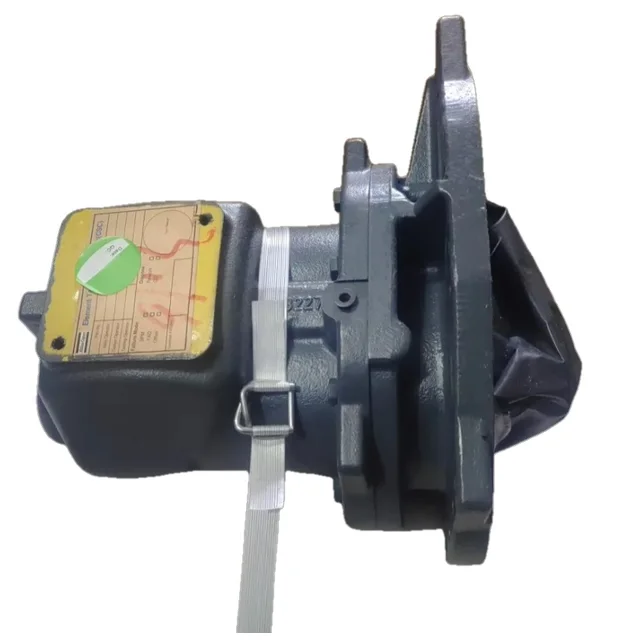
The short answer: low pressure, high temperature, unusual noise, vibration or declining air quality can justify an air-end investigation, but no single symptom proves that the element has failed. Check the compressor as a system first—filters, cooling, lubricant, leaks, valves, controls and operating conditions—then use qualified inspection to decide whether the air end should be repaired, refurbished through an applicable manufacturer program or changed for a new genuine unit.
This is not a minor wording point. Condemning an air end too early can produce an expensive order without fixing the original fault. Waiting too long after internal damage has been confirmed can turn a planned intervention into an unplanned shutdown. The useful middle ground is an evidence-based decision with clear technical boundaries.
What the air end does—and what it does not diagnose
In a rotary screw compressor, the air end is the element in which the actual compression takes place. Intermeshing rotors reduce the available volume and raise the air pressure before discharge. That makes the element central to delivered flow, pressure, efficiency and reliability, but it still operates inside a larger package.
The inlet system controls the air entering the element. The lubricant and cooling circuits manage heat in an oil-injected machine. Separators, valves, sensors, drives and controls affect what the operator sees at the outlet and display. A fault elsewhere in that chain can imitate an internal air-end problem.
Read the symptom at package level first. Move toward the air end only as simpler external causes are checked and the operating evidence begins to point inward.
Five signs that justify an air-end investigation
Atlas Copco lists five broad signs of air-end deterioration. They are useful because each can be observed or trended without opening the element. They should be treated as investigation triggers, not automatic purchase instructions.
Delivery falls against a comparable, verified operating condition.
Grinding, knocking or whining that differs from the machine's normal acoustic pattern.
Operating or discharge temperature rises under a similar load and environment.
Measured or clearly observed vibration and imbalance increase.
Oil, moisture or particles increase in the delivered air and other causes require investigation.
More power is required to deliver comparable air after demand and system losses are normalized.
Hot, humid and dusty environments can accelerate wear, but environment alone is not a diagnosis either. Record the actual conditions so the technician can compare them with the machine's operating limits and maintenance history.
A symptom is not the same as a diagnosis
The same observation can have several causes. The table below is deliberately written as a route to the next evidence, not a chart that declares the air end failed.
Complete the package-level checks first
The order of checks should follow the machine manual and local safety procedure. The sequence below is a practical discussion framework, not permission to open energized or pressurized equipment.
Read the alarms and operating trend
Record load state, pressure, element outlet temperature, ambient conditions and the time at which the symptom occurs.
Confirm demand and measurement
Make sure increased plant demand, a downstream restriction or an inaccurate sensor is not being read as lost compressor capacity.
Inspect filtration and the inlet path
A restricted inlet raises the work required from the compressor and can reduce delivered flow.
Check leaks, valves and controls
External leakage or a valve that does not reach its commanded position can create low-pressure symptoms without internal rotor damage.
Review cooling and ventilation
Keep coolers clean, verify room airflow or cooling-water conditions and compare ambient temperature with the manual limits.
Check lubricant condition where applicable
Verify level, grade, service history and signs of degradation using the manufacturer procedure.
Compare with the maintenance record
Recent service work, extended intervals or a long-term change in vibration and output may explain when the condition began.
Before panels, pipework or internal parts are inspected, follow the specific machine manual, isolate all energy sources and release system pressure. Compressor work should be performed by qualified personnel.
What stronger evidence of internal wear looks like
Once package-level causes have been excluded, the technician can evaluate whether the evidence is consistent with internal wear or damage. The exact method depends on air-end type and available manufacturer procedure. Useful evidence may include repeatable loss of delivered performance, vibration and acoustic measurements, bearing condition, lubricant or debris findings, rotor or coating condition, clearances and the history of a mechanical event.
Opening an air end is not a general inspection shortcut. Atlas Copco warns that incorrect disassembly and reassembly can increase energy use, shorten service life and contaminate compressed air. Oil-free elements add tight alignment, sealing and rotor-coating requirements that demand specialist handling.
Repeatable operating data, qualified measurements, internal condition findings and a compressor-specific service assessment.
One high-temperature event, a phone recording of noise, visual similarity to a failed unit or an unexplained efficiency estimate.
Service history, environment, duty pattern, lubricant record, previous alarms and the event that first changed performance.
Machine serial number, old air-end part number and current verified genuine part before downtime is scheduled.
Repair, manufacturer refurbishment or a new genuine air end
The right path depends on confirmed internal condition, element technology, the remaining compressor package, available manufacturer programs, downtime and warranty scope. It should not be selected from age or operating hours alone.
Specialist repair
Consider only when the exact air-end type and damage fall within a documented specialist process. The written scope should identify measurements, parts, testing and warranty.
Atlas Copco refurbishment route
Atlas Copco describes a factory-standard refurbishment program for oil-injected rotary screw air ends. Availability and eligibility must be confirmed for the exact element and region.
New genuine Atlas Copco air end
A new original unit is the direct path when repair is unsuitable, condition is severe, an oil-free element requires factory precision, or downtime and risk favor a complete new element.
Changing the air end can preserve an otherwise serviceable compressor. Before that decision, review the motor and drive, coolers, controls, vessel, piping and known package issues so the new element is not installed into an unresolved system fault.
Collect the records before requesting price and availability
A quotation should start with identity and condition evidence, not only the words “air end damaged.” Send the following information in one packet:
- Compressor model, complete serial number and machine nameplate photograph.
- Old air-end part number, element or stage code and complete old-unit photographs.
- Alarm history and recorded pressure, temperature, load state and ambient conditions.
- Description of noise, vibration, oil carryover or loss of output, including when it occurs.
- Recent service work, lubricant and filter history, and checks already completed.
- Required quantity, destination and planned shutdown window.
Frequently asked questions
Does low compressor pressure mean the air end has failed?
No. Low pressure or reduced delivery can also result from higher demand, air leaks, restricted filters, valve problems, control settings or measurement faults. It is a reason to investigate the air end only after the package-level causes and operating data have been checked.
Can overheating damage a compressor air end?
Persistent overheating can damage lubricant, bearings, seals, coatings and other components. The cause may lie in ventilation, cooling, oil level or quality, filters, workload, ambient temperature or internal wear, so the alarm history and cooling system should be checked before a conclusion is made.
Can a worn air end be repaired?
Some oil-injected rotary screw air ends may qualify for a manufacturer-supported repair or refurbishment route. The exact option depends on element type, internal condition, region and available program. Precision oil-free elements require different handling and should not be opened by a general workshop.
Can the air end be changed without changing the whole compressor?
Yes, a new genuine air end can be fitted when the rest of the compressor package remains serviceable and the exact current part has been confirmed. The decision should also consider controls, motor, cooling system, vessel condition, downtime and total repair scope.
Who should inspect the inside of an air end?
A qualified compressor specialist with the correct manufacturer procedures, measuring equipment and tools. Internal clearances, rotor condition, coatings, bearings and alignment cannot be judged reliably from a general visual inspection.
What records should be collected before requesting a new air end?
Provide the machine model and serial number, air-end part number and code, alarm history, operating pressure and temperature, service records, lubricant details where applicable, observed noise or vibration, and clear nameplate and assembly photographs.
Official references used for this article
Technical statements were checked against the Atlas Copco resources below. Links are provided so maintenance and purchasing teams can inspect the original context.
- Atlas Copco: If the compressor air end is worn or damaged, can it be refurbished?Official description of air-end deterioration signs, specialist repair limits, new-element options and the manufacturer refurbishment route for oil-injected rotary screw elements.
- Atlas Copco: Air compressor element overheatingOfficial overview of non-air-end causes of high temperature, including ventilation, filters, workload, lubricant, worn components, ambient heat and compressor sizing.
- Atlas Copco: How to troubleshoot an air compressorOfficial troubleshooting guidance covering safe isolation and system checks before internal compressor work.
- Atlas Copco: Screw compressor maintenance checklistOfficial reminder that maintenance intervals are model-specific, with recurring checks for oil, temperature, pressure, noise, vibration, filters, cooling and leaks.
Written and reviewed by the Aisipu Air End Team on July 27, 2026. Aisipu is an authorized Atlas Copco supplier. The article is an independent buyer resource and was not reviewed by Atlas Copco.
Request a Quote
Send us the part number or machine model and serial number. A clear old-unit or nameplate photo helps us confirm the correct genuine Atlas Copco air end and quote faster.